Target before features.
The first rule is to define exactly what is predicted, at what timestamp, and with which information set. That prevents target leakage and keeps the model honest.

Engineered
Creativity

A machine learning workflow focused on signal quality, validation and explainability. The page explains the process before showing outputs.
ML projects can look impressive while hiding weak validation. This case study makes model evaluation, data leakage control and feature reasoning visible.
The structure follows a clean modelling loop: define the target, audit the data, build features, split properly, evaluate with cross-validation and communicate uncertainty.
A more honest ML presentation: less hype, more evidence, clearer model behaviour.
The first rule is to define exactly what is predicted, at what timestamp, and with which information set. That prevents target leakage and keeps the model honest.
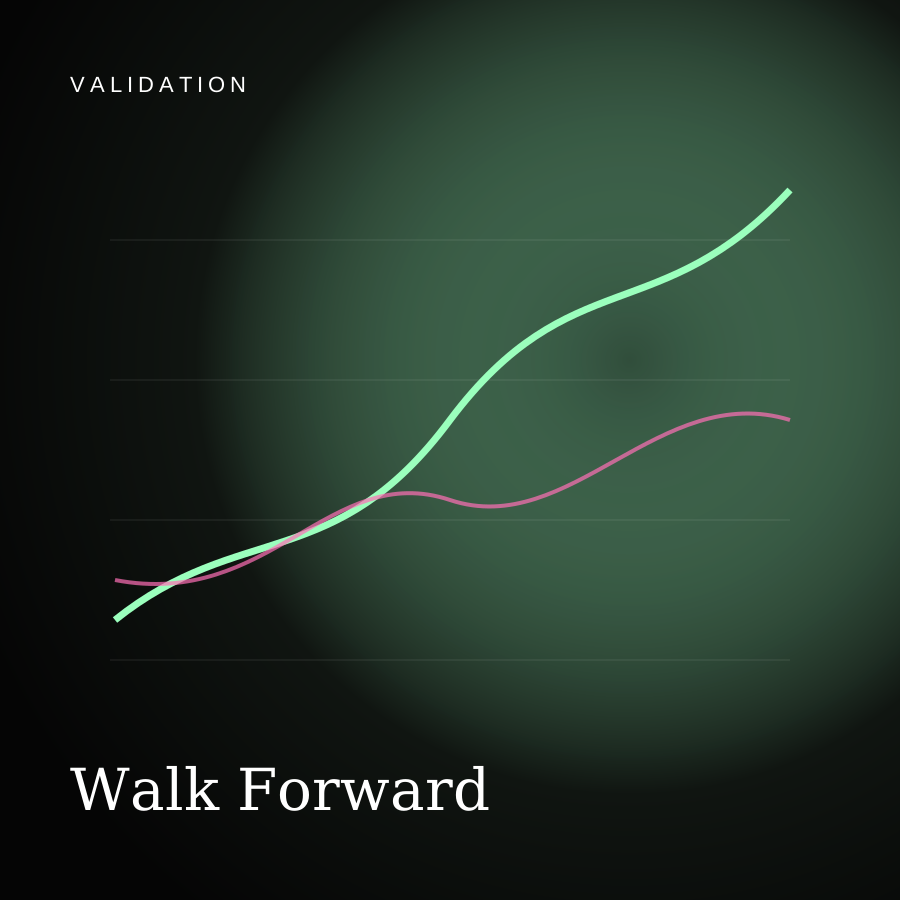
For time-dependent data, random splits are dangerous. Walk-forward validation tests whether the signal survives when the model only sees the past.
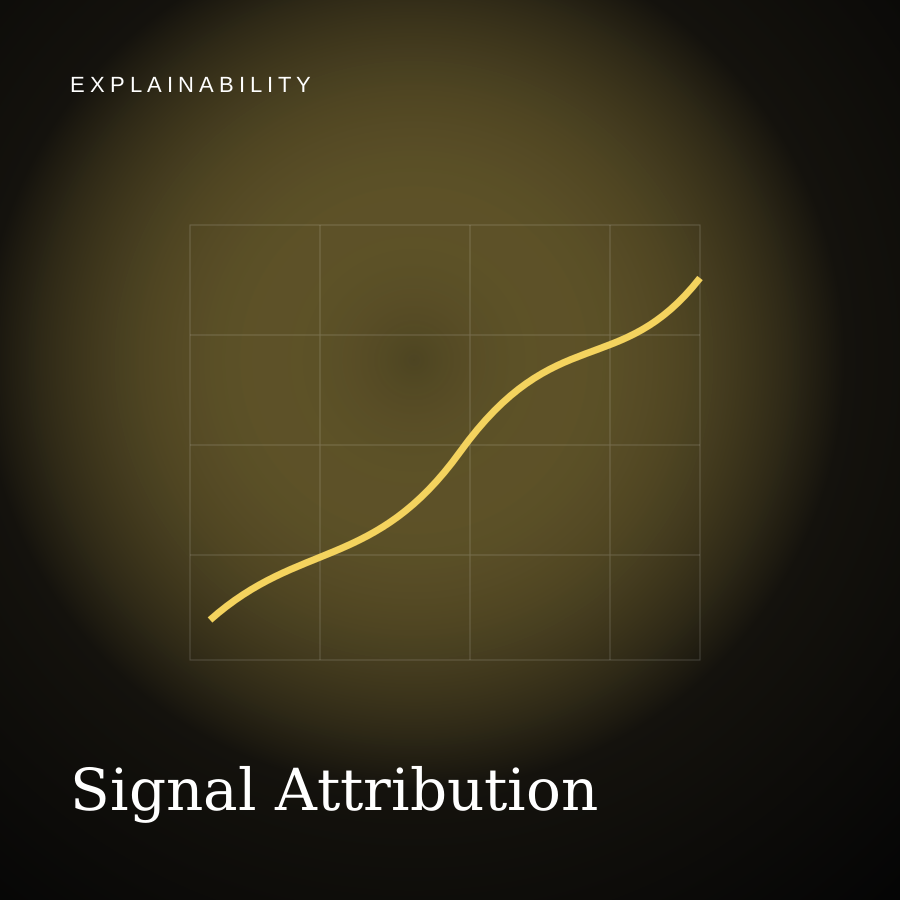
Accuracy alone is not enough. The page reads residuals by regime, feature sensitivity, probability calibration and failure clusters.
A production signal needs monitoring for input drift, target drift and decision drift. The output is a living system, not a one-time score.


This case study is designed as an explanatory page: context first, then method, then outputs. It avoids hiding behind screenshots and makes the thinking visible.
The visual language stays close to the existing ENS site: dark accents, strong spacing, restrained motion and clear editorial hierarchy.